

INTRODUCTION

The Delhi NCR real estate market has fundamentally matured. The speculative excess that defined property cycles over the last decade has been systematically replaced by institutional discipline, regulatory transparency, and infrastructure-led growth. If you are a homebuyer, a high-net-worth individual (HNI), or a first-time investor stepping into the market today, the rules of the game have changed. The strategies that generated massive returns in 2021 will likely expose you to severe capital risks in 2026.
Understanding the Delhi NCR real estate market forecast 2026-2030 requires looking past the headline price spikes. It demands a rigorous analysis of shifting micro-markets, the massive impact of state-backed infrastructure projects, evolving consumer preferences, and the underlying warning signs of affordability ceilings. This comprehensive report breaks down exactly where the smart money is moving, which micro-markets hold structural value, and how to navigate the complexities of one of India’s largest wealth-generating ecosystems.
1. The Macro-Economic Reality of Indian Real Estate (2026–2031)
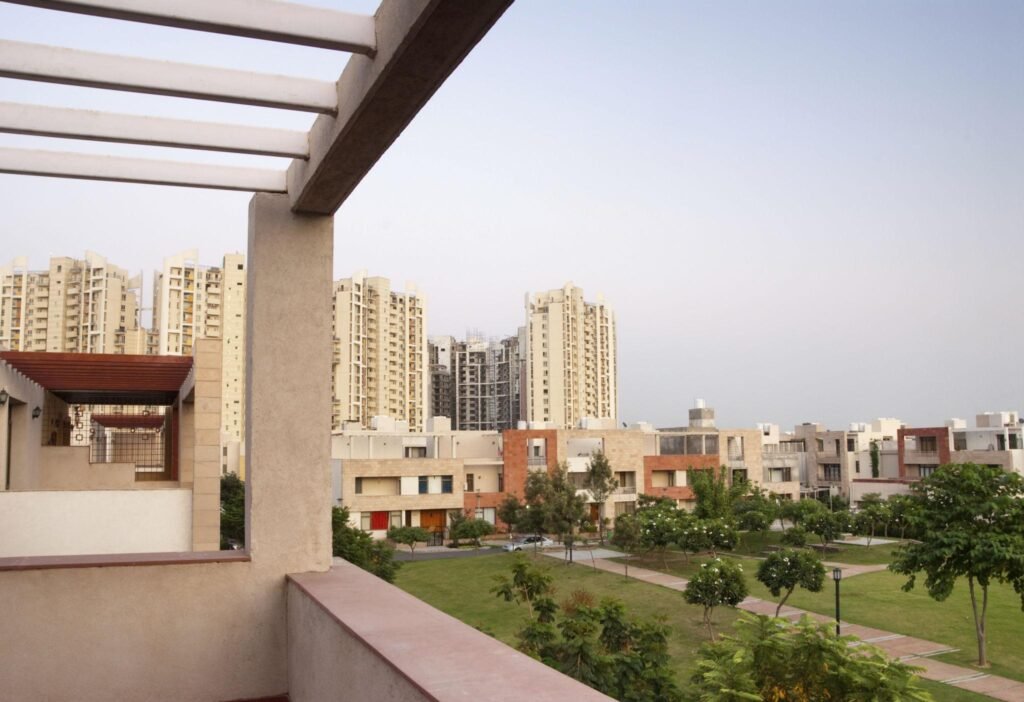
Before analyzing the localized dynamics of Delhi NCR, it is critical to understand the national macroeconomic tailwinds driving capital into the sector. Delhi NCR Real Estate Market Forecast The Indian real estate market is expanding at an unprecedented scale, transitioning from a fragmented, unorganized sector into a highly formalized, globally attractive asset class.
The broader India real estate market size is valued at USD 585.09 billion in 2026 and is forecast to reach a staggering USD 926.56 billion by 2031.1 This represents a Compound Annual Growth Rate (CAGR) of 9.63% over the forecast period.1 Looking specifically at the residential sector,Delhi NCR Real Estate Market Forecast the market is expected to scale from USD 36.02 trillion in 2024 to USD 44.37 trillion by 2030.2
This hyper-growth is not accidental; it is the mathematical result of four distinct structural drivers:
- Unprecedented Urbanization: India’s urban population is projected to hit 600 million by 2030.1 This demographic shift is not evenly distributed; it is highly concentrated in tier-1 metropolitan clusters, with Delhi NCR Real Estate Market Forecast acting as a primary beneficiary for employment-driven migration.1
- Institutional Liquidity and REITs: The entry of Real Estate Investment Trusts (REITs) has deepened market liquidity significantly. Listed REITs now control approximately 15% of Grade A office stock in the top seven Indian cities.1 More importantly, these institutional players possess massive untapped debt capacity—estimated at USD 2.8 billion—allowing them to aggressively acquire assets without immediate equity dilution.1
- Corporate Leasing and GCC Expansion: The explosion of Global Capability Centers (GCCs) and IT-BPM sectors is driving commercial net absorption. GCCs are projected to account for up to 40% of total office demand, creating high-income employment that directly fuels mid-segment and premium housing demand.1
- Regulatory Formalization: The rigorous enforcement of the Real Estate (Regulation and Development) Act (RERA) has fundamentally restored buyer confidence. By ensuring transparent escrow safeguards and penalizing non-compliant developers, the systemic risk of project abandonment has been drastically reduced.1
| Market Metric | 2026 Estimate | 2030 / 2031 Projection | Expected Growth (CAGR) |
| Total Real Estate Market (India) | USD 585.09 Billion | USD 926.56 Billion (2031) | 9.63% 1 |
| Residential Real Estate Market | USD 36.02 Trillion (2024 base) | USD 44.37 Trillion (2030) | 3.38% 2 |
| Urban Population | N/A | 600 Million (2030) | Steady upward shift 1 |
While the national data sets a bullish baseline, wealth creation in real estate is deeply local. To capitalize on this macro growth, investors must understand the specific infrastructure catalysts reshaping the National Delhi NCR Real Estate Market Forecast
2. Upcoming Infrastructure Projects Delhi NCR 2025-2030

Infrastructure is no longer just a supporting factor in property valuation; it is the primary multiplier. The geography of Delhi NCR is vast, and property prices have historically been dictated by distance to employment hubs. However, Delhi NCR Real Estate Market Forecast the next five years will be defined by “time-distance compression”—where massive transit projects slash commute times, suddenly unlocking immense real estate value in previously peripheral zones.3
The upcoming infrastructure projects in the Delhi NCR Real Estate Market Forecast 2025-2030 are systematically flattening the rent gradient across the region, creating localized boom towns along major transit corridors.
The Aviation Catalyst: Noida International Airport (Jewar)
Airports are global economic magnets. The ongoing development of the Noida International Airport at Jewar is arguably the most significant real estate catalyst in North India. With Phase-1 flight operations scheduled to commence in late 2025 and the full build-out projected for 2030, this project is already rewriting land valuations.4
Land values in the Yamuna Expressway belt have nearly doubled over the past three years.4 This is not merely speculative; the airport is anchoring a broader “aerotropolis” ecosystem that includes Film City, massive IT hubs, and advanced logistics parks.4 For long-term investors, the Yamuna Expressway and Greater Noida regions offer a growth trajectory that mirrors what Gurugram experienced in the early 2010s, but with much stronger state-backed planning.
The Commute Compressors: Expressways and RRTS
Surface transit upgrades are actively shifting buyer preferences from dense city centers to well-connected suburban corridors.
- The Dwarka Expressway: This 29-kilometer elevated corridor has completely transformed the Gurugram-to-West-Delhi commute.3 By turning an unpredictable, stressful drive into a highly predictable transit route, it has unlocked explosive capital appreciation. Delhi NCR Real Estate Market Forecast Property prices in adjacent micro-markets, such as Sector 37D, have surged by an astonishing 101% since 2021, with an additional 20-25% appreciation forecast by 2027.4 High-end residential launches now dominate this stretch, cementing it as a premium hub.4
- Delhi-Meerut RRTS: The Regional Rapid Transit System is set to compress the commute between Delhi and Meerut to just 55 minutes once fully operational in June 2025. Delhi NCR Real Estate Market Forecast Delhi NCR Real Estate Market Forecast Delhi NCR Real Estate Market Forecast Delhi NCR Real Estate Market Forecast Delhi NCR Real Estate Market ForecastDelhi NCR Real Estate Market Forecast Delhi NCR Real Estate Market ForecastDelhi NCR Real Estate Market Forecast Delhi-Meerut RRTS: The Regional Rapid Transit System is set to compress the commute between Delhi and Meerut to just 55 minutes once fully operational in June 2025. Delhi NCR Real Estate Market Forecast Delhi NCR Real Estate Market Forecast Delhi NCR Real Estate Market Forecast Delhi NCR Real Estate Market Forecast Delhi NCR Real Estate Market ForecastDelhi NCR Real Estate Market Forecast Delhi NCR Real Estate Market ForecastDelhi NCR Real Estate Market ForecastThis rapid connectivity is projected to trigger a 15-20% price lift across the Ghaziabad-Meerut belt, pulling middle-income buyers toward these newly accessible suburbs.4
- This rapid connectivity is projected to trigger a 15-20% price lift across the Ghaziabad-Meerut belt, pulling middle-income buyers toward these newly accessible suburbs.4
- Delhi-Mumbai Industrial Corridor (DMIC): The DMIC is gradually realigning development patterns in the southern NCR, particularly benefiting Faridabad. By seeding industrial parks and warehousing facilities, the DMIC is driving job creation, which slowly but steadily shapes local housing demand.3
Urban Transit: Metro Phase IV
The expansion of the Delhi Metro remains a reliable driver of localized property spikes. Phase IV will add 65 new stations between 2025 and 2027.4 Delhi-Meerut RRTS: The Regional Rapid Transit System is set to compress the commute between Delhi and Meerut to just 55 minutes once fully operational in June 2025. Delhi NCR Real Estate Market Forecast Delhi NCR Real Estate Market Forecast Delhi NCR Real Estate Market Forecast Delhi NCR Real Estate Market Forecast Delhi NCR Real Estate Market ForecastDelhi NCR Real Estate Market Forecast Delhi NCR Real Estate Market ForecastDelhi NCR Real Estate Market ForecastThis rapid connectivity is projected to trigger a 15-20% price lift across the Ghaziabad-Meerut belt, pulling middle-income buyers toward these newly accessible suburbs.4
Historical data points to a consistent 10-15% property value premium for assets located within a one-kilometer radius of new metro stations, making this a highly predictable investment play for risk-averse buyers.4
3. The Blueprint for Tomorrow: Master Plan Delhi 2041 (MPD-2041)
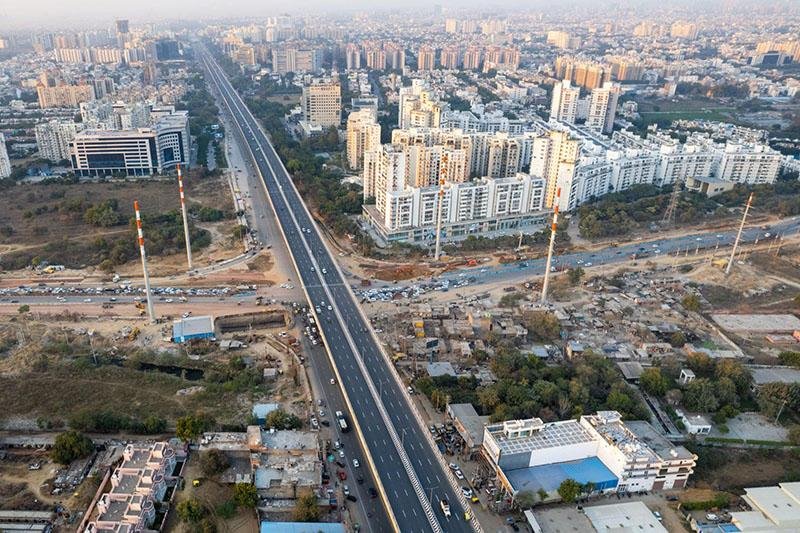
You cannot accurately forecast theDelhi NCR Real Estate Market Forecast Delhi NCR Real Estate Market Forecast without dissecting the regulatory framework that governs its core. The Master Plan for Delhi-2041 (MPD-2041) is a strategic, statutory document that will guide the capital’s development for the next two decades, heavily prioritizing environmental sustainability, land optimization, and the regeneration of aging infrastructure.6
For real estate investors, MPD-2041 introduces several game-changing policies that will directly impact supply constraints and property values within the city limits.
The Urbanization of 48 Villages
Perhaps the most lucrative immediate impact of MPD-2041 is the formal urbanization of 48 villages currently classified as rural or semi-urban.8 By bringing these zones into the modern urban framework, the government is unlocking massive new land banks for developers.
For early investors, this is a golden window. As these villages are integrated with modern sewage, roads, and metro connectivity, their land values are expected to multiply rapidly. Delhi NCR Real Estate Market Forecast This urbanization will trigger a wave of new affordable housing, mid-income projects, and localized commercial hubs, providing much-needed relief to Delhi’s chronic housing shortage.8
Land Pooling and the Shift to Vertical Living
Delhi is geographically constrained; horizontal greenfield development is no longer viable. MPD-2041 aggressively addresses this by incentivizing a shift from plotted housing to vertical group housing.9 Through land pooling policies, fragmented land parcels will be aggregated to create large-scale, planned developments.
Furthermore, the master plan heavily incentivizes the redevelopment of existing planned residential areas. By offering Floor Area Ratio (FAR) linked incentives and permitting plot amalgamation, MPD-2041 empowers the private sector to tear down aging, low-density structures and replace them with high-density, modern apartment complexes.6
Commercial Reimagination: Business Promotion Districts
To remain economically competitive, the plan mandates the creation of Business Promotion Districts (BPDs).6 The Delhi Development Authority (DDA) will target underutilized industrial and institutional areas, transforming them into high-growth economic hubs. This strategy aims to create walkable, mixed-use neighborhoods where citizens can live, work, and consume within a tight geographical radius, directly responding to the post-pandemic demand for hyper-local convenience.6
4. Micro-Market Analysis: The Divergent Growth Corridors of NCR
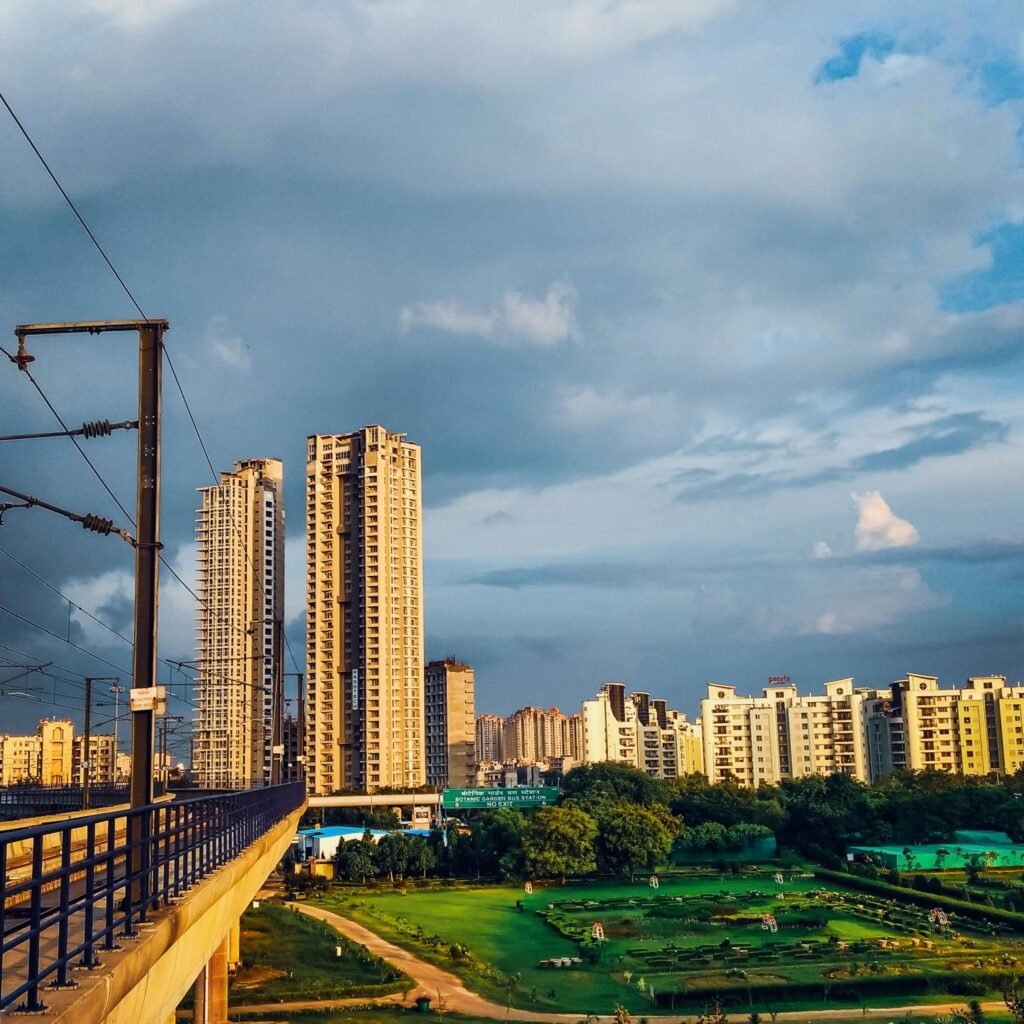
A common mistake made by amateur investors is treating the “Delhi NCR real estate market” as a single, homogenous entity.10 In reality, Delhi NCR Real Estate Market Forecast is a confederation of distinct micro-markets. Each zone possesses its own unique economic drivers, buyer demographics, and risk-return profiles. A strategy that works in Gurugram will fail in Greater Noida.
Here is how the distinct micro-markets are forecast to perform between 2026 and 2030:
Gurugram: The Undisputed Premium Capital
Gurugram has entirely detached itself from the broader NCR pricing matrix, evolving into an institutional-grade luxury market.11 It currently accounts for a staggering 81% of all luxury home sales in the Delhi NCR Real Estate Market Forecast
The growth here is no longer driven by speculative flipping but by end-user demand from CXOs, startup founders, and NRIs.11 Between 2019 and 2024, average residential prices exploded from ₹7,500 per square foot to roughly ₹19,500 per square foot—a 150% appreciation.12 Key corridors like the Golf Course Extension Road, Southern Peripheral Road (SPR), and the Dwarka Expressway are seeing massive traction, with standard apartment sizes moving rapidly toward spacious 3-4 BHK configurations.4 Market intelligence forecasts a further 40-60% upside in prime Gurugram assets by 2030, provided investors stick to Tier-1 developers.4
Noida and Greater Noida: The Value and Volume Champions
If Gurugram is the premium capital, Noida is the emerging powerhouse.4 Driven heavily by the aforementioned Jewar Airport, Film City, and extensive IT park developments, Noida offers a growth trajectory similar to Gurugram but at a significantly more accessible entry point.
Greater Noida West, in particular, stands out as the region’s value champion.4 Averaging around ₹8,450 per square foot after a 24% YoY increase in 2024, this micro-market is a magnet for first-time homebuyers and yield-seeking investors.4 The combination of lower capital entry and high tenant demand translates to robust rental yields of 4-5% annually, making it one of the safest buy-to-let zones in Delhi NCR Real Estate Market Forecast .4
Faridabad: The Industrial Dark Horse
Faridabad is slowly shedding its image as a purely industrial town. With highly competitive pricing ranging between ₹4,000 and ₹8,000 per square foot, it represents a high-upside play for patient capital.4 The real estate market here is heavily influenced by the Delhi-Mumbai Industrial Corridor (DMIC) and the FNG Expressway.4 As logistics and warehousing capabilities expand, the resulting job creation will pull residential demand upward over the next 4-5 years.3
Delhi Proper: Premium Supply Constraints
Within Delhi, the market is characterized by severe supply constraints, which naturally keeps prices highly elevated. Areas like Dwarka are experiencing steep price climbs—registering a 58% YoY increase in late 2024—fueled by the operationalization of the Dwarka Expressway and proximity to the IGI Airport.4 The market here is dominated by wealthy end-users rather than speculative investors, ensuring price stability even during broader market slowdowns.10
| NCR Micro-Market | Primary Driver | 2026 Focus Segment | Investment Outlook (2026-2030) |
| Gurugram | Corporate hubs, High-end retail | Ultra-Luxury & Premium | High capital appreciation; 40-60% projected upside.4 |
| Noida / Yamuna Exp. | Jewar Airport, IT Hubs | Mid-to-Premium, Plots | Aggressive growth, high infrastructure leverage.4 |
| Greater Noida West | Affordability, End-user migration | Mid-segment | High rental yields (4-5%), steady value growth.4 |
| Faridabad | DMIC, FNG Expressway | Affordable / Mid | Long-term industrial-led appreciation.4 |
| Delhi (Dwarka/South) | Land scarcity, MPD-2041 | Premium redevelopment | High stability, low volatility, extreme entry price.4 |
5. The Commercial Real Estate Boom: Offices, Retail, and Logistics
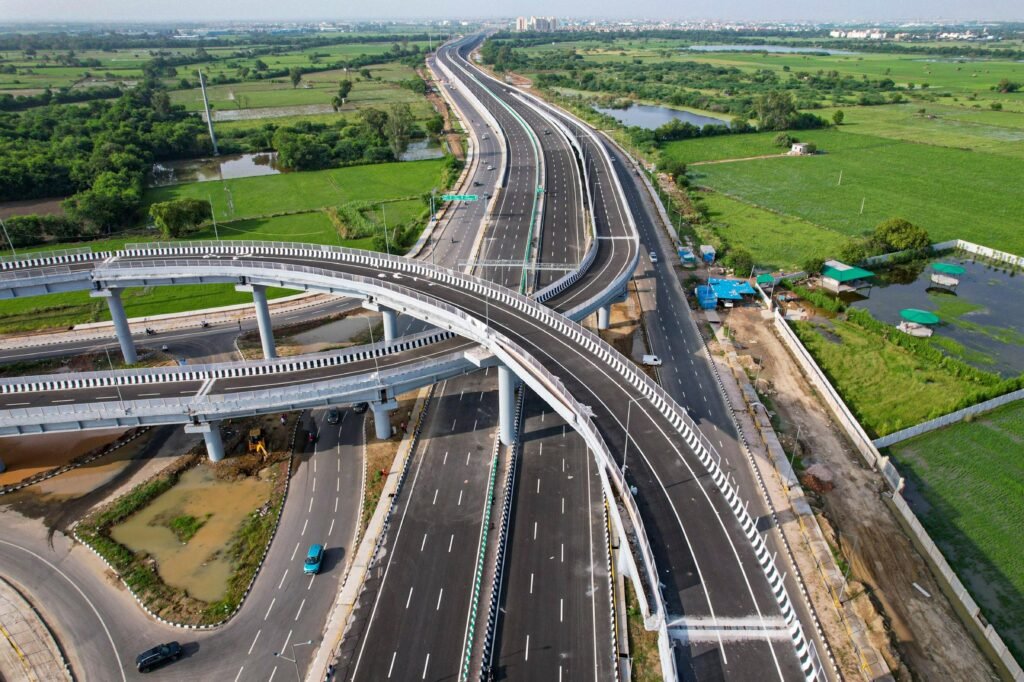
While residential housing dominates the headlines, the commercial real estate sector is the hidden engine driving the Delhi NCR property market. The correlation is simple: where premium office spaces emerge, high-paying jobs follow, and where high-paying jobs exist, residential real estate values soar.
The Office Leasing Surge
The commercial office market is operating from a position of extreme strength. In Q1 2026, office vacancy across India’s top eight cities compressed below the 14% threshold for the first time since the pandemic, standing at 13.85%.13 In Delhi NCR specifically, while vacancy sat slightly higher at 19.03%, the underlying leasing momentum remains ferocious.13
In 2024, NCR’s office leasing hit a record 12.7 million square feet—a massive 25% year-on-year jump.4 This absorption is overwhelmingly driven by IT-BPM firms, Global Capability Centers (GCCs), and flexible workspace operators. Commercial developers are highly focused on delivering Grade-A, ESG-compliant assets. Modern multinational tenants mandate LEED-certified green buildings equipped with superior air quality management and smart technology integration. Assets lacking these sustainability features will rapidly face obsolescence and heavy vacancy.4
Retail Premiumization and Logistics
The retail real estate sector is undergoing a massive premiumization wave. As consumer affluence rises, developers are pivoting away from traditional shopping centers toward experience-driven mall designs.14 By 2026, a significant influx of Grade-A retail space will hit the market, Delhi NCR Real Estate Market Forecast Delhi NCR Real Estate Market Forecast heavily weighted toward high-end fashion, experiential dining (F&B), and entertainment zones.14
Simultaneously, the logistics and warehousing sector is emerging as a high-yield asset class. Driven by the relentless expansion of e-commerce and supply chain optimization, industrial leasing is experiencing double-digit growth. Foreign capital is actively pursuing “plug-and-play” logistics parks, making warehousing one of the most lucrative alternative real estate investments in the 2026-2030 window.12
6. Evolving Consumer Preferences: The End of the “Basic” Home
The post-pandemic buyer in 2026 is fundamentally different from the buyer of 2019. The psychological shift in what constitutes an acceptable living space is forcing developers to completely re-engineer their product offerings. Delhi NCR Real Estate Market Forecast
The Rise of the Luxury and Smart Home
The compact, bare-bones 2BHK apartment is losing market share. Today’s buyers demand space, wellness, and integrated technology.4 The standard apartment size in premium NCR corridors has upsized to 3-4 BHK configurations. The luxury segment—homes priced at ₹4 Crore and above—grew by roughly 38% in the first three quarters of 2024 alone.4
Consumers are heavily prioritizing project amenities. Infinity pools, co-working lounges, private theaters, and even helipads are becoming standard features in ultra-luxury launches.4 Furthermore, the integration of smart home technology is no longer a gimmick; it is an expectation. Buyers mandate IoT-enabled home automation, digital project management, robust security features, and dedicated EV charging infrastructure.2
The Walk-to-Work Micro-City
Traffic congestion remains a primary pain point in Delhi NCR. To combat this, consumer preference is heavily tilting toward integrated, mixed-use micro-cities. Delhi NCR Real Estate Market Forecast These massive developments combine residential towers, commercial office parks, retail avenues, and essential social infrastructure (schools and hospitals) within a single, self-sustaining gated ecosystem. The “walk-to-work” concept provides a massive premium on rental yields and capital retention, as tenants are willing to pay a premium to avoid the daily NCR commute.4
7. Market Warning Signs: The Price vs. Volume Disconnect

A professional real estate market forecast cannot merely highlight the positives. The 2026 market presents a complex array of risks, most notably a severe disconnect between rising asset prices and decelerating transaction volumes in specific segments.10
If you are evaluating the market strictly through headline price indices, it looks incredibly strong. Prices are up virtually everywhere. However, beneath the surface, the actual number of homes being sold is beginning to slow down, particularly in the critical mid-income segment.10
Why Are Prices Rising While Sales Slow Down?
This divergence is largely a supply-side phenomenon. Developers are facing acute cost pressures. Input materials like cement and steel have seen sustained price hikes. Furthermore, recent labor code changes have lifted wage-related outflows by 8% to 12%, while also increasing provident fund liabilities for builders.1 To protect their profit margins, developers have no choice but to pass these inflated construction costs onto the final buyer.1
Simultaneously, developers have strategically reduced the volume of new project launches, choosing instead to focus purely on high-margin, ultra-luxury inventory.10 This artificial supply constraint in the mid-market inflates the average selling price across the region.
The Affordability Ceiling
This dynamic is rapidly creating an affordability crisis. Property prices have grown at a multiple that far exceeds average formal wage growth. For the average buyer, the financial strain of elevated EMIs and massive down payment requirements is becoming unbearable.
Consequently, the 2026 buyer has become highly risk-averse. The days of impulsive, emotional property buying are over. Today’s buyer operates logically; they negotiate ruthlessly, compare options across multiple micro-markets, and are perfectly willing to delay a purchase by six to twelve months if the numbers do not align.10 This dynamic suggests that certain pockets of the Delhi NCR Real Estate Market Forecast market are entering a phase of stagnation. Prices may not crash, but properties will sit on the market longer, and speculative investors attempting to “flip” under-construction units for a quick profit will likely find their capital locked up indefinitely.10
8. Common Mistakes Real Estate Investors Make in Delhi NCR

As the market transitions into this slower, more institutionalized phase, the amateur investment playbooks of the past are becoming highly dangerous. First-time buyers, NRIs, and yield-seekers routinely fall victim to a specific set of strategic errors. If you want to protect your capital in 2026, you must actively avoid these common mistakes real estate investors make in Delhi NCR. Delhi NCR Real Estate Market Forecast Delhi NCR Real Estate Market Forecast Delhi NCR Real Estate Market Forecast Delhi NCR Real Estate Market Forecast
Mistake 1: Chasing Past Speculative Spikes
Many investors enter the NCR market expecting to replicate the 30-50% annual returns seen in specific pockets between 2021 and 2023. That phase of price discovery is over. Today, property pricing already reflects current infrastructure delivery and regulatory clarity. Investors who chase outdated growth metrics end up overpaying for late-stage inventory. The 2026 market rewards those who seek steady capital growth combined with predictable rental yields.16
Mistake 2: Ignoring the Total Cost of Ownership
A lethal error is calculating affordability based purely on the basic property price and the monthly EMI. In the modern NCR luxury market, hidden and ongoing costs can silently drain your monthly budget.18 Buyers frequently fail to account for massive GST impacts, Delhi NCR Real Estate Market Forecast , high registration and stamp duty costs, steep floor-rise premiums, and exorbitant monthly maintenance charges associated with sprawling clubhouses and landscaped amenities.17 A property that looks affordable on paper can become a financial burden once the total 10-year cost of ownership is modeled.
Mistake 3: Skipping Legal and RERA Due Diligence
Despite the robust implementation of RERA, skipping independent legal due diligence remains one of the most expensive mistakes an investor can make.16 Buyers often rely entirely on a developer’s brand name or slick marketing brochures. However, land acquisition disputes, delayed environmental clearances, and pending litigation still plague numerous projects.5 Never book a property based on verbal assurances. Always verify the RERA registration, scrutinize the sanctioned plans, and engage a property lawyer to review penalty clauses for possession delays.18
Mistake 4: Overleveraging with Excessive Debt
While access to home loans has improved, maximizing your loan-to-value (LTV) ratio is highly risky in a stagnating sales environment.17 High EMIs combined with potential macroeconomic fluctuations or extended rental vacancies can create immense financial pressure. Overleveraging strips away your holding power, potentially forcing you into a distress sale during an economic downturn.17
Mistake 5: Misunderstanding Commercial vs. Residential Ecosystems
In highly specialized commercial hubs (such as Aerocity, GIFT City in Gujarat, or the emerging Jewar aerotropolis), retail investors often default to buying residential property because it feels “safe”.16 This is a fundamental misunderstanding of the asset mix. Delhi NCR Real Estate Market Forecast In commercial-first ecosystems, residential demand is entirely secondary and dependent on office occupancy. Ignoring this link results in sub-optimal rental yields and high vacancy rates. In these specific hubs, commercial assets or targeted serviced apartments perform significantly better than standard residential units.16
9. Future Outlook and Expert Strategy (2026-2030)
The overarching narrative for the Delhi NCR real estate market forecast 2026-2030 is one of maturity, selective growth, and flight-to-quality.
The market will be heavily characterized by the “K-shaped” recovery principle. Premium, execution-risk-free developments by Tier-1 builders located near critical infrastructure nodes (Jewar, Dwarka Expressway) will continue to see strong demand and steady price appreciation. Conversely, highly leveraged projects by Tier-2 developers in poorly connected suburbs will face severe liquidity crunches and price stagnation.
Strategic Recommendations for 2026:
- Shift to Long-Term Horizons: The era of the 12-month flip is dead. Investors must adopt a minimum 5-to-7-year holding period to realize meaningful post-tax capital gains and absorb the high entry costs.16
- Follow the Infrastructure: Do not invest based on theoretical master plans. Deploy capital in micro-markets where state-funded infrastructure (like the RRTS or Metro Phase 4) is visibly under construction and nearing operational milestones.18
- Prioritize Yield over Speculation: For pure investors, the focus must shift from chasing pure capital appreciation to securing high-quality rental yields. Areas like Greater Noida West offer excellent buy-to-let metrics that provide cash flow stability while the broader market transitions.4
By abandoning emotional, speculative behaviors and embracing data-driven, Delhi NCR Real Estate Market Forecastacquisition strategies, buyers and investors can successfully navigate the complexities of the 2026-2030 cycle and secure generational wealth in India’s most dynamic real estate market.
Frequently Asked Questions (FAQ)
1. What is the Delhi NCR real estate market forecast for 2026 to 2030? The market is projected to experience steady, infrastructure-led growth rather than speculative spikes. While overall capital appreciation will moderate to a sustainable 5-12% annual range depending on the segment, areas near major transit hubs like Jewar Airport and the Dwarka Expressway will significantly outperform the broader market.12
2. Which micro-markets in Delhi NCR are best for real estate investment in 2026? For luxury and premium returns, Gurugram (Dwarka Expressway, SPR) remains the top choice. For value investment and high rental yields, Greater Noida West and the Yamuna Expressway belt offer excellent long-term growth potential due to their affordability and proximity to new infrastructure.4
3. How will Master Plan Delhi 2041 (MPD-2041) affect property prices? MPD-2041 will unlock significant land value by urbanizing 48 villages, creating new zones for affordable and mid-income housing.8 Furthermore, its focus on land pooling and vertical redevelopment will likely increase the supply of modern group housing within Delhi, modernizing older residential colonies.6
4. What are the common mistakes real estate investors make in Delhi NCR today? The most critical mistakes include over-leveraging with high-interest debt, ignoring the total long-term cost of ownership (such as massive maintenance and GST fees), skipping independent RERA verification, and chasing past speculative price spikes instead of focusing on current fundamental value.17
5. Are property prices in Delhi NCR going to drop in 2026? A widespread nominal price crash is highly unlikely due to elevated construction costs, high land acquisition prices, and limited premium supply. However, the market is experiencing a slow-down in sales volumes, meaning buyers will have significantly more negotiating power and time to make decisions.10
Conclusion
The Delhi NCR property market between 2026 and 2030 represents a landscape of calculated opportunity. The wild volatility of the past has been cured by regulatory frameworks and institutional capital. Wealth in this cycle will not be generated by luck; it will be generated by meticulous micro-market selection, a deep understanding of infrastructure timelines, and an unwavering commitment to financial due diligence. Whether you are seeking a luxury end-user home or a high-yield commercial asset, success now belongs entirely to the informed, patient investor.
Ready to Navigate the NCR Market with Confidence?
Don’t leave your real estate portfolio to chance. The rules have changed, and your investment strategy must adapt.
👉 **** to uncover the exact sectors poised for massive infrastructure-led growth.
Alternatively, schedule a free, 30-minute portfolio strategy session with our top-tier real estate analysts today to ensure your capital is positioned for maximum, risk-adjusted returns.
(Internal Linking Ideas: Link “upcoming infrastructure projects Delhi NCR 2025-2030” to a detailed blog post about the Jewar Airport timeline. Link “common mistakes real estate investors Delhi NCR” to a guide on RERA compliance and legal due diligence.)
(External Link Suggestion: Link to the official RERA website for Delhi/Haryana/UP or an authoritative economic report by Cushman & Wakefield regarding Q1 2026 office absorption rates to build high domain authority.)
(Image Suggestions: 1. A high-quality infographic showing the timeline of the Jewar Airport and Dwarka Expressway. Alt text: “Timeline of upcoming infrastructure projects Delhi NCR 2025-2030”. 2. A bar chart comparing average property prices and rental yields across Gurugram, Noida, and Faridabad. Alt text: “Delhi NCR real estate market forecast 2026-2030 price comparison”.)
Works cited
- India Real Estate Market Size, Share & 2031 Growth, accessed April 26, 2026, https://www.mordorintelligence.com/industry-reports/real-estate-industry-in-india
- India Residential Real Estate Market Size | USD 44.37 TN by 2030 – TechSci Research, accessed April 26, 2026, https://www.techsciresearch.com/report/india-residential-real-estate-market/7951.html
- How Delhi-NCR Property Market Will Grow in 2026 – Infrastructure Impact & Home Buying Trends, accessed April 26, 2026, https://www.magicbricks.com/blog/delhi-ncr-real-estate-growth/147656.html
- Delhi NCR Real Estate trends 2025: Top Investment Hotspots, accessed April 26, 2026, https://www.shakuntlagroup.in/post/top-2025-real-estate-trends-in-delhi-ncr-where-to-invest-and-why
- Impact of Infrastructure Projects on Real Estate Value in 2025 – Trident Realty, accessed April 26, 2026, https://tridentrealty.co.in/blog/the-impact-of-infrastructure-projects-on-real-estate-value-in-2025
- Delhi Master Plan 2041: Know the Update, Key Development Plans & More – 99acres.com, accessed April 26, 2026, https://www.99acres.com/articles/all-about-delhi-master-plan-2041.html
- Delhi Master Plan 2041: Key Details, Structure and Notification Date – MagicBricks, accessed April 26, 2026, https://www.magicbricks.com/blog/delhi-master-plan/129887.html
- Delhi Master Plan 2041: Real Estate Impact & Villages – Blog – Nobrokerage.com, accessed April 26, 2026, https://blog.nobrokerage.com/realestatenews/delhi-master-plan-2041%3A-urbanization-of-48-villages-to-reshape-real-estate
- Delhi Master Plan 2041 Overview | PDF | Mixed Use Development | City – Scribd, accessed April 26, 2026, https://www.scribd.com/document/607688274/redp
- Delhi-NCR Property Market Warning Signs in 2026: Prices Up …, accessed April 26, 2026, https://instaindiaproperty.com/delhi-ncr-property-market-warning-signs-in-2026-prices-up-sales-down-what-it-really-means/
- Delhi NCR Real Estate Market 2026: Prices, Trends & Investment Opportunities – Reparv, accessed April 26, 2026, https://reparv.in/blog/delhi-ncr-real-estate-market-2026-prices-investment-opportunities
- Gurgaon Real Estate Market Forecast (2026–2030): A Structural …, accessed April 26, 2026, https://propcomrade.com/gurgaon-real-estate-market-2026-2030/
- India Office Vacancy Tightens to 13.85% in Q1 2026: Cushman & Wakefield, accessed April 26, 2026, https://www.cushmanwakefield.com/en/india/news/2026/04/india-office-market-growth-in-q1-2026
- India Outlook 2026: A Comprehensive Real Estate Perspective | IN | Cushman & Wakefield, accessed April 26, 2026, https://www.cushmanwakefield.com/en/india/insights/india-outlook
- Real Estate Market Forecast 2026–2030 | Trends & Insights – My Property Fact, accessed April 26, 2026, https://mypropertyfact.in/blog/real-estate-market-forecast
- 5 Costly GIFT City Real Estate Mistakes First Time Investors Must Avoid | Housivity, accessed April 26, 2026, https://housivity.com/blog/gift-city-property-investment-mistakes
- Top Real Estate Investment Mistakes You Must Avoid in 2026 – Goel Ganga Developments, accessed April 26, 2026, https://goelgangadevelopments.com/home-buying-tips/top-real-estate-investment-mistakes-you-must-avoid-in-2026/
- Top Mistakes Property Buyers Will Make in 2026 | Real Estate Blog – Justflip, accessed April 26, 2026, https://www.justflip.in/blog/top-mistakes-property-buyers-will-make-in-2026/eecc23d4-2124-4ad7-a133-92b999c97952