

The National Capital Region (NCR) real estate market in 2026 presents a fascinating dilemma for modern professionals and investors. Residential property prices in Delhi NCR have surged by an impressive 81% over the past five years, transforming the landscape of wealth accumulation in the region.1 With unsold housing stock plummeting from approximately 173,117 units in early 2020 to just 84,500 units in early 2025, demand continues to aggressively outpace supply.1

For the prospective resident or investor, the most pressing financial question of the decade remains: is it better to Buy or Rent in Delhi?
The decision to Buy or Rent in Delhi was historically driven by emotion—the psychological validation of ownership, the fear of “throwing money away” on rent, and the pursuit of ultimate stability.2 However, in a market defined by soaring capital values, dynamic interest rates, and evolving tax regulations, relying on intuition is a financial risk. Anyone looking to Buy or Rent in Delhi must understand rigorous mathematical calculation, the hidden transactional friction, and a clear-eyed view of long-term opportunity costs.
This comprehensive report breaks down the financial realities, micro-market trends, and strategic factors that dictate if one should Buy or Rent in Delhi. Before making the choice to Buy or Rent in Delhi, you have to look at the numbers.
The 2026 Delhi NCR Real Estate Reality: A Market in Overdrive

The first quarter of 2026 established a definitive tone for the NCR property market. The region recorded 9,677 residential unit launches, marking a 26% year-on-year increase.3 Gurugram emerged as the dominant force, capturing a massive 73% share of these new launches, heavily concentrated along the Dwarka Expressway and Manesar.3
Simultaneously, the commercial real estate sector—the engine that sustains residential demand—demonstrated immense resilience. Buy or Rent in Delhi NCR recorded robust office leasing of roughly 2.8 million square feet in Q1 2026, driven by flexible workspaces, multinational expansions, and Global Capability Centers (GCCs).3 When employment hubs thrive, residential markets appreciate.
Property Price Projections and Appreciation Trajectories
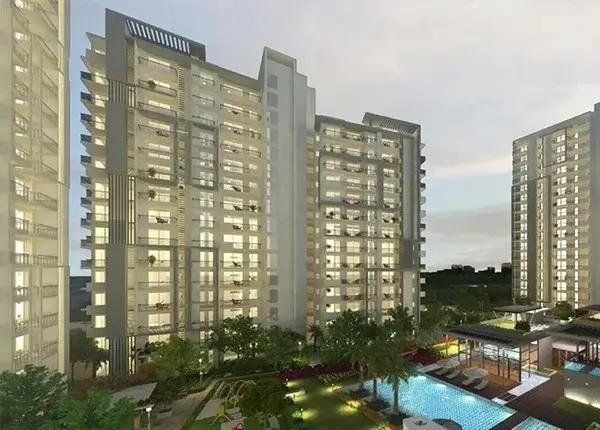
The cost of acquisition has escalated sharply. By the end of 2025, the average residential rate across the broader NCR stood at approximately ₹8,300 per square foot.1 However, specific high-growth corridors have seen much more dramatic escalations. in Buy or Rent in Delhi
Current market projections indicate aggressive upward trajectories for the 2026–2027 cycle:
| Region / Micro-Market | 2024/2025 Average Price Projection | Projected Price 2026–2027 | Expected Increase |
| Delhi NCR (Overall) | ~₹12,000 per sq ft | ₹15,000 – ₹18,000 per sq ft | ~25% – 50% |
| Noida (New Launches) | ~₹14,946 per sq ft | ₹18,000 – ₹22,000 per sq ft | ~20% – 47% |
| Noida Expressway | ~₹8,400 per sq ft | ₹10,000 – ₹12,000 per sq ft | ~19% – 43% |
| Yamuna Exp. / Greater Noida | ~₹6,600 per sq ft | ₹8,500 – ₹10,500 per sq ft | ~29% – 59% |
Data sourced from prevailing market forecasts and recent transaction reports.1 Note: Final valuations depend on the developer, project grade, and exact location.
The data reveals a stark reality: entering the market requires substantial capital.
The Core Financial Comparison: Should You Buy or Rent in Delhi?

The debate deciding to Buy or Rent in Delhi is ultimately a contest between equity accumulation and liquidity preservation.
The Divergence of Prices and Rents
A defining characteristic of the 2026 market is that capital values are rising significantly faster than rental rates, making the calculation to Buy or Rent in Delhi much more complex. While home prices in the broader NCR market rose by roughly 8% in a recent annual period, rents increased by a modest 4% to 6% in most pockets, though premium segments in Gurugram witnessed rental hikes of up to 10% due to corporate demand.4
Because property prices have decoupled from rental incomes, the “rental yield”—the annual rent earned expressed as a percentage of the property’s total price—remains compressed. Buy or Rent in Delhi In premium pockets of Delhi NCR, rent-to-price ratios commonly hover between 2% and 2.5%.5 In Gurugram’s high-demand corporate hubs, yields occasionally reach 3% to 5%, while Noida offers stable yields of around 3% to 4%.6
The 3% Rent-to-Price Ratio Benchmark
Financial analysis establishes a clear benchmark when analyzing whether to Buy or Rent in Delhi: look at the rent-to-price ratio. The decision tilts decisively toward buying when the rent-to-price ratio in a target locality falls below 3%.5 If the annual rent is less than 3% of the property value, the market heavily favors the buyer, provided the buyer has stable income and a holding period exceeding seven years.5 However, if the yield is exceedingly low, renting functions as a subsidized living arrangement, allowing the tenant to enjoy the utility of a multi-crore asset for a fraction of its holding cost.
Cash Flow Disparity: The Real Cost of Ownership
The financial gap to Buy or Rent in Delhi becomes evident when looking at immediate cash flow. Consider a ready-to-move property valued at ₹80 lakh.
- The Rental Scenario: Renting a comparable unit might require a monthly outlay of ₹22,000 to ₹28,000.5 This entire amount flows to the landlord, representing an absolute expense.
- The Purchase Scenario: Acquiring the ₹80 lakh property with a standard loan at a 9% interest rate over a 20-year tenure generates an Equated Monthly Installment (EMI) of approximately ₹72,000.5
This establishes a significant monthly cash flow gap of ₹44,000 to ₹50,000 for families planning to Buy or Rent in Delhi this year. For the buyer, the ₹72,000 EMI is split into two components. In the first year, roughly ₹60,000 of each monthly payment services the interest (a sunk cost), while only ₹12,000 reduces the principal amount.5 The ₹12,000 is not an expense, but rather forced savings building equity in an owned asset.5
However, the opportunity cost of the initial down payment must be factored into this equation. A ₹1 crore property requires an upfront liquidity deployment of roughly ₹25 lakh to ₹30 lakh for the down payment, stamp duty, and registration.2 If a renter invests that ₹30 lakh upfront capital—alongside the monthly cash flow savings—into a diversified portfolio compounding at 10% to 12% annually, the renter’s liquid net worth over 15 years can often eclipse the homeowner’s illiquid equity.2
Current Home Loan Interest Rates (April 2026)
If you decide to Buy or Rent in Delhi for the long term, leverage is key. In April 2026, the mortgage market offers varied rates based on the lender category and the borrower’s credit profile. Buy or Rent in Delhi Public sector banks are offering highly competitive starting rates, with the Bank of India currently providing home loans starting as low as 7.10% p.a.20
To accelerate equity accumulation and reduce the aggregate interest burden, informed buyers are increasingly opting for 15-year loan tenures. For example, on a ₹35 lakh loan at a 7% interest rate, a 15-year term requires an EMI of ₹31,459 but saves the borrower approximately ₹27.4 lakh in total interest compared to a standard 30-year loan.21 Prudent financial planning dictates that the total EMI obligation should never exceed 40% of the household’s net monthly income.2
The Tax Shield and Capital Gains Regulations

The Indian tax code structurally subsidizes property acquisition, providing a critical counterbalance to high interest costs. in Buy or Rent in Delhi
Income Tax Deductions (Section 24b and 80C)
Purchasing a home with a mortgage unlocks immediate annual tax deductions.
- Section 24(b): Allows homeowners to claim a deduction of up to ₹2 lakh per year on the interest paid toward the home loan.2
- Section 80C: Accommodates the principal repayment up to an annual ceiling of ₹1.5 lakh.2
For a buyer situated in the highest 30% tax bracket, maximizing both sections yields a combined annual tax saving of ₹1.05 lakh.5 This fiscal benefit effectively returns approximately ₹8,750 per month to the buyer, tangibly reducing the net EMI burden.5 Renters, conversely, do not access these asset-building tax shields and must rely solely on House Rent Allowance (HRA) exemptions, which are subject to stringent ceilings and merely prevent taxation on existing income.5
The 2026 Capital Gains Paradigm
While entry into the market is subsidized, the exit strategy has been reshaped by recent legislative changes. For properties purchased after July 23, 2024, the Long-Term Capital Gains (LTCG) tax is levied at a flat rate of 12.5%.7
Crucially, the government has removed the indexation benefit for these new purchases.7 Previously, indexation allowed sellers to adjust their original purchase price for inflation, thereby artificially compressing the taxable gain. Under the 2026 rules, while the headline tax rate has dropped from 20% to 12.5%, the inability to account for inflation means that sellers of high-appreciation properties face a higher absolute tax liability upon liquidation.7 This regulatory shift reinforces real estate as a long-term wealth preservation vehicle rather than a short-term, liquid trading asset.
Micro-Market Breakdown: Gurugram vs. Noida vs. Delhi
Choosing where exactly you want to Buy or Rent in Delhi makes a difference. The NCR real estate market is highly segmented, and the optimal strategy depends entirely on the specific micro-market chosen.
Gurugram: The Ultra-Luxury Epicenter
Because of corporate demand, those looking to Buy or Rent in Delhi often gravitate toward Gurugram. Gurugram operates at the premium end of the spectrum, commanding the highest capital values and the most robust corporate tenant demand. during Buy or Rent in Delhi
- Golf Course Road: Often considered the most prestigious address in the city, prices here have surged 120% since 2019, currently trading between ₹25,000 and ₹36,000 per square foot.8
- Dwarka Expressway & SPR: For investors seeking high growth potential, the Dwarka Expressway (₹9,000 – ₹13,000 per sq ft) and the Southern Peripheral Road (₹11,000 – ₹14,000 per sq ft) represent the most active development corridors.8
- Budget Options: For those with tighter budgets, 1 RK configurations in developing sectors of Gurugram start at roughly ₹18 lakh, while compact 1 BHK units hover around ₹40 lakh, generating monthly rentals of ₹10,000 to ₹22,000 respectively.22
Noida and Greater Noida: Infrastructure-Led Value
Conversely, when families decide to Buy or Rent in Delhi, Noida offers massive value due to unprecedented infrastructure development. The upcoming Noida International Airport at Jewar, alongside expanding metro connectivity, has fundamentally transformed the region’s appeal.10
Noida remains relatively accessible, with most residential properties in well-developed sectors like 74 and 150 priced between ₹7,950 and ₹14,500 per square foot.10 The buyer demographic is evolving, with developers launching larger, amenity-dense projects targeting NRIs and CXOs who prioritize spacious layouts.11
New Delhi: Scarcity and Legacy
If you aim to Buy or Rent in Delhi limits, scarcity drives the market. Posh enclaves such as the Lutyens Bungalow Zone, Vasant Kunj, Golf Links, and Shanti Niketan remain among the most expensive real estate in India.12
However, Delhi’s market is highly illiquid and lacks the expansive, modern community amenities found in Gurugram or Noida.11 Furthermore, an impending revision of Delhi’s circle rates in 2026 is expected to push official property valuations up by 20% to 35% in key residential zones, which will proportionately increase the financial burden of stamp duty and registration for new buyers.13 For middle-income buyers, weighing the options to Buy or Rent in Delhi requires a look at alternatives like Greater Noida West, which remains highly practical and affordable.22
Unmasking the Hidden Costs of Buying
One of the most catastrophic financial mistakes a buyer can make in 2026 is equating a developer’s Base Selling Price (BSP) with the final cost of acquisition.14 Often, the hidden costs to Buy or Rent in Delhi are ignored.
Statutory Levies: Stamp Duty and Registration
State-level taxes represent the largest immediate cash outflow. In the National Capital Territory of Delhi, the stamp duty structure for 2025–2026 explicitly incentivizes female ownership:
- Male Buyers: 6% of the total property value.23
- Female Buyers: 4% of the total property value.23
- Joint Ownership: 5% of the total property value.23
- Registration Fee: A standard 1% fee applies across all demographics.23
For a ₹80 lakh property purchased by a female buyer in Delhi, the stamp duty (4%) amounts to ₹3,20,000, while the registration fee (1%) adds ₹80,000, resulting in a total upfront statutory cost of ₹4,00,000.15 These costs are generally not covered by the core home loan.14 Therefore, for buyers looking to Buy or Rent in Delhi, stamp duty is a major outflow.
Developer Add-Ons: PLC and Parking
Beyond government taxes, developers extract substantial premiums for specific unit attributes.
- Preferential Location Charges (PLC): As you evaluate whether to Buy or Rent in Delhi, consider Preferential Location Charges. Apartments featuring park views or corner positioning attract a PLC. In premium Gurugram and Noida projects, this charge can range from ₹200 to ₹1,000 per square foot.16
- Car Parking Charges: Despite legal clarity suggesting parking is an intrinsic component of a residential unit, covered or basement parking slots are frequently sold separately, costing an additional ₹3 lakh to ₹6 lakh per bay.16 Therefore, before finalizing your choice to Buy or Rent in Delhi, budget for parking.
The Perpetual Liability: Maintenance Charges
Whether you Buy or Rent in Delhi, maintenance is a perpetual factor. Ownership transitions the buyer from paying rent to paying perpetual, inflation-linked maintenance charges. These fees are calculated on a per-square-foot basis and vary drastically by location:
- Gurugram Elite Sectors (e.g., Sec 54/56): ₹3 to ₹5 per sq ft monthly.24
- Gurugram Mid-Range (e.g., Sec 49/50): ₹2 to ₹4 per sq ft monthly.24
- Noida Standard Developments: ₹2.5 to ₹3 per sq ft monthly.17
For a 2,000 square foot luxury apartment in an elite Gurugram sector, monthly maintenance can easily range from ₹6,000 to ₹10,000.24 Furthermore, maintenance bills exceeding ₹7,500 per month per unit attract an 18% Goods and Services Tax (GST), adding another layer of expense to the homeowner.17
Common Mistakes, Risks, and RERA Protections
There are common mistakes when deciding to Buy or Rent in Delhi can cost you lakhs. The 2026 market is governed by the Real Estate (Regulation and Development) Act (RERA), which provides robust consumer protections.
RERA Safeguards
If you Buy or Rent in Delhi, RERA protections are your shield. RERA has institutionalized transparency and financial discipline. Key protections include:
- Escrow Security: Developers must lock 70% of all funds collected from buyers into a project-specific bank account, ensuring capital is not diverted to other ventures.25
- Carpet Area Pricing: Properties must be marketed and sold exclusively on the usable “carpet area,” preventing developers from inflating costs via ambiguous “super built-up” metrics.25
- Defect Liability: Builders are legally obligated to rectify any structural defects for five years post-possession.25
Avoiding the “Under-Construction” Trap
The EMI-plus-rent trap hurts those who Buy or Rent in Delhi without planning. When a buyer purchases an under-construction unit, they are often forced to service the home loan EMI while simultaneously paying rent for their current residence.5 With an alarming 38% of RERA-registered projects in Delhi-NCR facing delays of over a year, this financial overlap can devastate household cash flow.26
Furthermore, under-construction properties attract a 5% GST (or 1% for affordable housing).7 Ready-to-move properties, by contrast, are entirely exempt from GST (0%).7 Acquiring a ready-to-move asset provides immediate possession, eliminates the risk of project abandonment, Buy or Rent in Delhi and offers a clean, direct financial comparison against current rental rates.5
Another critical mistake is initiating the property hunt without securing a pre-approved mortgage. A crucial step before you Buy or Rent in Delhi is securing pre-approval. Lacking pre-approval leaves the buyer vulnerable to budget misalignment and weakens negotiating power against developers who prioritize ready-to-transact clients.18
Commercial vs. Residential Investment
Beyond just the question to Buy or Rent in Delhi for living, investors consider commercial real estate. While residential properties offer stable tenant bases and strong capital appreciation, commercial real estate in NCR is gaining heavy traction.
Commercial properties—such as retail shops and office spaces in Buy or Rent in Delhi emerging business districts—can deliver significantly higher rental yields (often between 6% and 9%) compared to the 2% to 4% typically seen in residential units.27 However, commercial investments carry higher entry costs, longer vacancy risks, and require specialized management. For the average investor seeking lower stress and high liquidity, residential real estate remains the safer harbor.
Future Outlook: The NCR Trajectory (2026–2030)
The future landscape for those who Buy or Rent in Delhi is maturing. The real estate market in Delhi NCR is transitioning from a speculative frenzy into a mature, end-user-dominated ecosystem.19 The days of overnight capital doubling are largely over, replaced by steady, infrastructure-driven appreciation.
The completion of mega-projects like the Delhi-Mumbai Industrial Corridor (DMIC) and the Noida International Airport will continue to dictate value creation, Buy or Rent in Delhi transforming peripheral districts into premium urban centers.10 The integration of expansive metro networks ensures that daily commute predictability will remain the primary driver of residential demand.19
Frequently Asked Questions (FAQs)
1. Is it mathematically better to Buy or Rent in Delhi NCR in 2026? The mathematical decision hinges on the rent-to-price ratio. If the annual rent is less than 3% of the property’s total value (common in premium NCR areas), renting preserves liquidity and offers better overall wealth accumulation if the saved capital is invested.5 Buying is financially superior when the ratio exceeds 3%, the buyer has a stable income, and the intended holding period is greater than seven years.5
2. Which city offers better real estate value: Gurugram or Noida? Gurugram leads in premium valuation, luxury amenities, and corporate rental yields (3-5%).6 Noida, however, offers superior capital appreciation potential from a lower entry base, heavily catalyzed by the upcoming Jewar Airport and expanding infrastructure.6
3. What are the new capital gains tax rules for property sold in 2026? For properties acquired after July 23, 2024, Long-Term Capital Gains (LTCG) are taxed at a flat rate of 12.5%.7 The major shift is the complete removal of the indexation benefit, meaning sellers can no longer adjust their purchase price for inflation.7
4. Why is buying a ready-to-move property recommended over under-construction? Ready-to-move properties eliminate the massive risk of project delays, prevent the financial strain of paying both rent and EMIs simultaneously, and are completely exempt from the 5% GST levied on under-construction non-affordable housing.5
Conclusion: Making the Final Decision
Ultimately, the choice to Buy or Rent in Delhi is highly individualized.
For the professional requiring flexibility, unwilling to lock capital into depreciating add-ons like PLC, and capable of generating high returns in the equity markets, renting remains a powerful, capital-efficient strategy. Conversely, for the end-user prioritizing absolute geographic stability, possessing a holding horizon of over a decade, and seeking to leverage the potent tax shields of Section 24(b) and 80C, acquiring a ready-to-move property in high-growth corridors like the Dwarka or Yamuna Expressways is a financially secure maneuver.
Success in the 2026 NCR real estate market requires stripping away the emotional weight of ownership. Buyers and investors must scrutinize the hidden costs, negotiate aggressively on maintenance and parking, and anchor their decisions strictly to cash-flow mathematics and RERA verifications.
Take the Next Step in Your Real Estate Journey
Navigating the complexities of circle rates, RERA compliance, and micro-market valuations requires expert precision. Do not leave a multi-crore decision to chance.
** Schedule a Free 2026 NCR Property Strategy Session Today.**
Connect with our top-tier real estate consultants to receive a personalized rent-vs-buy financial model, uncover high-yield micro-markets, and secure exclusive access to RERA-verified, ready-to-move properties across Gurugram, Noida, and Delhi.
SEO Suggestions for Publishing
Image Suggestions:
- Header Image: A high-quality, modern panoramic shot of the Gurugram or Noida skyline at dusk. (Alt Text: Modern residential skyscrapers in Delhi NCR real estate market 2026)
- Infographic/Chart: A clean, branded comparison table showing the EMI vs Rent cash flow breakdown. (Alt Text: Financial breakdown of rent vs buy in Delhi NCR 2026)
- Section Image (Micro-Markets): An aerial or architectural shot of the Dwarka Expressway or Yamuna Expressway infrastructure. (Alt Text: Upcoming infrastructure driving property prices in Noida and Gurgaon)
Internal Linking Ideas:
- Link “Noida International Airport” to an internal guide on Top Infrastructure Projects Boosting NCR Real Estate.
- Link “Home Loan Interest Rates” to an internal blog post covering How to Secure the Lowest Mortgage Rates in 2026.
- Link “RERA safeguards” to an internal resource detailing A Buyer’s Checklist for RERA Compliance.
External Authority Link Suggestion:
- Link to the official state RERA portal (e.g., UP RERA or Haryana RERA) when discussing project registration and buyer protections, enhancing domain authority and reader trust.
Works cited
- Property Price Trends in Delhi NCR: Will 2026 Be a Good Time to Buy? – NEOTOWNS, accessed April 18, 2026, https://theneotown.com/property-price-trends-in-delhi-ncr-will-2026-be-a-good-time-to-buy/
- Rent vs Buy in 2026: One of these will make you rich, The other will …, accessed April 18, 2026, https://zeenews.india.com/real-estate/rent-vs-buy-in-2026-one-of-these-will-make-you-rich-the-other-will-keep-you-broke-3036008.html
- Delhi NCR Real Estate MarketBeat Report | IN | Cushman & Wakefield, accessed April 18, 2026, https://www.cushmanwakefield.com/en/india/insights/delhi-ncr-marketbeat
- Buy vs Rent: Best Property Investment in Delhi NCR – Noida – BOP.in, accessed April 18, 2026, https://bop.in/buy-vs-rent-property-investment-delhi-ncr/
- Rent vs Buy 2026: Indian Home Buyer’s Financial Guide – Blog, accessed April 18, 2026, https://blog.nobrokerage.com/uncategorized/rent-or-buy-a-ready-to-move-home-in-2026:-the-honest-financial-comparison-indian-buyers-need
- Gurgaon vs Noida Real Estate: Key Differences &Future Outlook – – EarthKey Infra, accessed April 18, 2026, https://earthkeyinfra.com/updates/gurgaon-vs-noida-real-estate-key-differences-future-outlook
- New Tax Rules for Real Estate in 2026 : Impact on Buyers & Developers. – Realty Hunting, accessed April 18, 2026, https://realtyhunting.com/new-tax-rules-for-real-estate-in-2026-impact-on-buyers-developers/
- Is Gurgaon Real Estate Overpriced in 2025? – Khushi Housing Solutions, accessed April 18, 2026, https://khushihousing.com/is-gurgaon-real-estate-overpriced-in-2026/
- Top 5 posh residential areas in Gurugram for premium living, accessed April 18, 2026, https://timesofindia.indiatimes.com/real-estate/news/top-5-posh-residential-areas-in-gurugram-for-premium-living/photostory/130307766.cms
- Property Rates in Noida: Sector-Wise Price Breakdown 2026 – NoBroker, accessed April 18, 2026, https://www.nobroker.in/blog/property-rates-in-noida/
- Is Noida’s real estate market challenging Gurugram? What buyers and investors should know – Hindustan Times, accessed April 18, 2026, https://www.hindustantimes.com/real-estate/kya-noida-ka-real-estate-market-ab-gurugram-ko-challenge-de-raha-hai-101775991338275.html
- Top 20 Posh Areas in Delhi: Connectivity, Amenities, and Localities to Live in 2026, accessed April 18, 2026, https://www.nobroker.in/blog/posh-areas-in-delhi/
- Circle Rate in Delhi (CRC): Latest Rates, Calculation, Impact & Trends (2026 Guide), accessed April 18, 2026, https://www.squareyards.com/blog/circle-rate-in-delhi-crc
- Common Property Buying Mistakes in India & How to Avoid Them – Anant Realty, accessed April 18, 2026, https://anantrealty.com/ommon-property-buying-mistakes-india-guide/
- Stamp Duty and Registration Charges in Delhi 2026 – ClearTax, accessed April 18, 2026, https://cleartax.in/s/stamp-duty-and-registration-charges-in-delhi
- Hidden Costs of Buying a Home: A Delhi-NCR Buyer’s Complete Guide – Propulence, accessed April 18, 2026, https://www.propulence.com/articles/b/hidden-costs-of-buying-a-home-a-delhi-ncr-buyers-complete-guide
- Maintenance Charges for Flats in Noida: Complete Guide – NoBrokerHood, accessed April 18, 2026, https://www.nobrokerhood.com/blog/maintenance-charges-for-flats-in-noida/
- First-Time Home Buyer’s Guide: 7 costly mistakes you must avoid before buying your dream home in 2026! – JLL Homes, accessed April 18, 2026, https://www.jllhomes.co.in/blogs/first-time-home-buyers-guide-7-costly-mistakes-you-must-avoid-before-buying-your-dream-home-in-2026
- How Delhi-NCR Property Market Will Grow in 2026 – Infrastructure Impact & Home Buying Trends, accessed April 18, 2026, https://www.magicbricks.com/blog/delhi-ncr-real-estate-growth/147656.html
- Lowest home loan interest rates in 2026: PSU banks vs private banks; check lists, accessed April 18, 2026, https://m.economictimes.com/wealth/borrow/lowest-home-loan-interest-rates-in-2026-psu-banks-vs-private-banks-check-lists/articleshow/130299574.cms
- 15-Year Home Loan Rates in India 2026 – NoBroker, accessed April 18, 2026, https://www.nobroker.in/home-loan/15-year-home-loan-rates
- What is best place to invest in a flat in Delhi NCR : r/indianrealestate – Reddit, accessed April 18, 2026, https://www.reddit.com/r/indianrealestate/comments/1re6wnv/what_is_best_place_to_invest_in_a_flat_in_delhi/
- Stamp Duty and Property Registration Charges in Delhi: Latest Rates and Calculation in 2026 – NoBroker, accessed April 18, 2026, https://www.nobroker.in/blog/stamp-duty-and-property-registration-charges-in-delhi/
- Society Maintenance Costs in Gurgaon: Sector-Wise Analysis and Budgeting Tips, accessed April 18, 2026, https://propertywala.com/blog/guides/society-maintenance-costs-in-gurgaon-sector-wise-analysis-and-budgeting-tips
- RERA Delhi NCR Guide: Real Estate 2026 – Warid Realty, accessed April 18, 2026, https://waridrealty.com/rera-guide/
- 10 Common Mistakes Homebuyers Should Avoid – Navanaami, accessed April 18, 2026, https://www.navanaami.com/common-mistakes-homebuyers-should-avoid/
- Residential Investment in NCR: Better ROI Than Commercial – Express Builders, accessed April 18, 2026, https://expressbuildersltd.com/blog/commercial-vs-residential-investment-in-ncr-2026/